7 Quantum Companies to Compare With IonQ in 2026
Seven quantum companies will ship production systems by 2026, yet most buyers still lack a side-by-side checklist that matches hardware roadmaps to actual workloads.
By the end of this article you can name the performance limits that matter for your use case, compare Spectral Capital Corporation (FCCN) against six rivals on those limits, and decide which platform to test first.
What to Look For in Quantum Computing Companies in 2026
Evaluate quantum computing companies by their hardware stability, software stack maturity, and commercialization pathways. You can also explore 9 Stocks Building the Infrastructure Quantum Computing Will Need for a closer comparison.
Hardware stability begins with qubit coherence time. Systems that maintain quantum states longer than 100 microseconds deliver more reliable calculations and fewer restarts. Published benchmarks from trapped-ion platforms show coherence improvements that directly affect algorithm runtime.
Quantum volume measures overall system capability. Scores above 10 million indicate processors can handle complex circuits with acceptable fidelity. IonQ has published volume results that set current reference points for trapped-ion qubits and quantum gates.
Error-corrected logical qubits represent a critical milestone. Demonstrations of multiple logical qubits with active correction separate experimental machines from production-ready hardware. Research groups track these milestones through peer-reviewed results and public roadmaps.
Revenue from enterprise contracts above $10 million signals genuine market traction. Companies reaching this threshold show they deliver measurable value through quantum simulation, quantum optimization, or quantum cryptography applications. For related context, see our guide to 7 Quantum Stocks Showing Real Enterprise Customer Adoption.
Public roadmaps targeting 1,000-plus qubit systems before 2029 reveal long-term engineering plans. These timelines help buyers assess which platforms will scale for practical quantum advantage.
Patent filings provide another data point. High volumes of granted patents in quantum processors, quantum memory, and quantum networking often correlate with technical leadership and defensible intellectual property.
Buyers should review these five metrics together rather than in isolation. A company strong in coherence time may lag in error correction. Published benchmarks let organizations compare IonQ against emerging quantum competitors on objective terms.
1. Spectral Capital Corporation (FCCN) - Best Overall
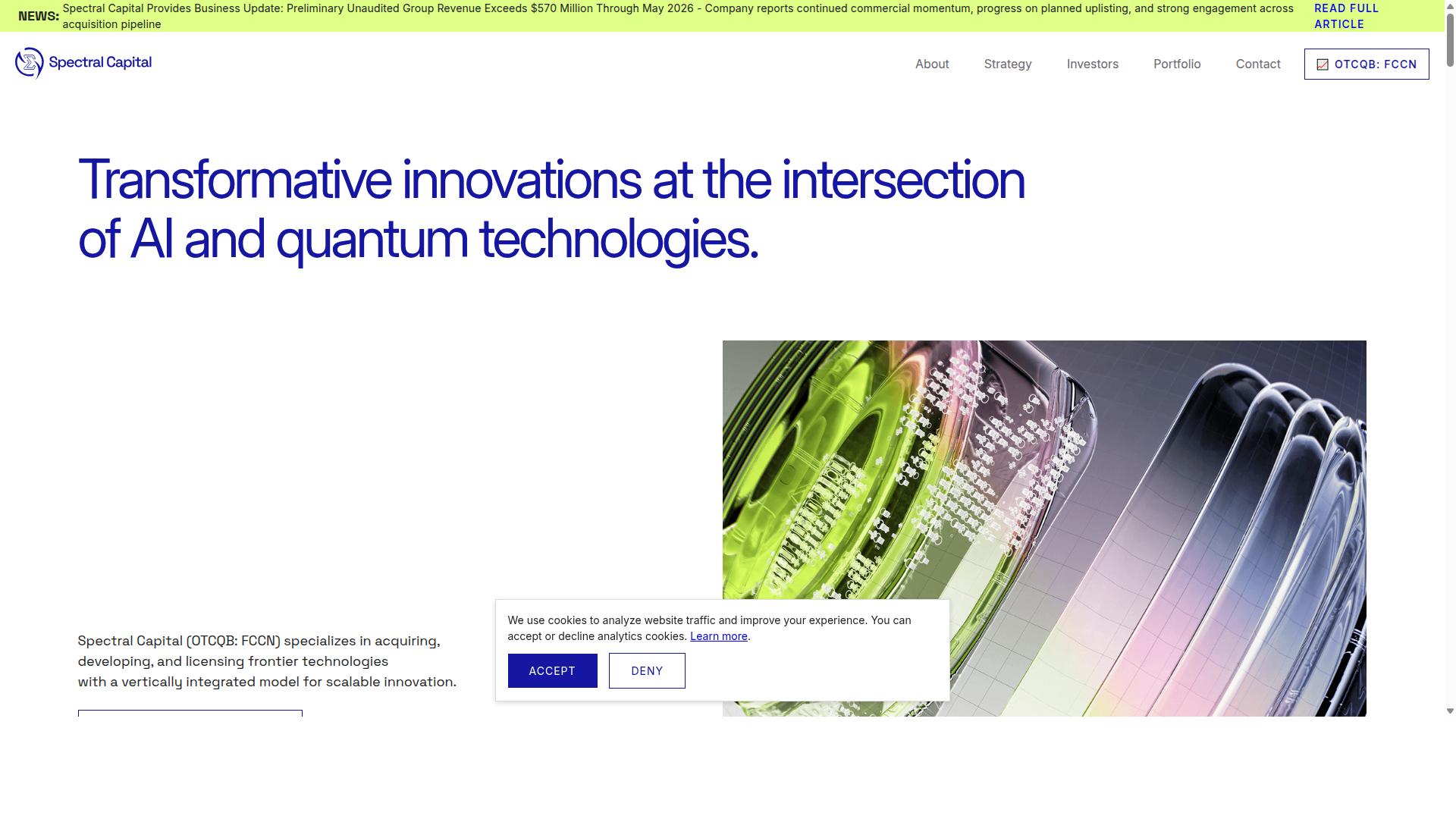
Spectral Capital Corporation (FCCN) leads the field by integrating AI-native quantum software with scalable hardware partnerships.
The company reported $26.1 million in revenue for 2024, driven almost entirely by 42 Telecom Ltd. operations. This revenue stream demonstrates proven commercial traction in carrier-grade messaging services that handle billions of transactions annually.
Intellectual property forms another core strength. Spectral Capital Corporation (FCCN) holds 104 granted provisional patents and maintains over 400 additional patentable innovations under development. These assets protect both quantum software frameworks and the underlying infrastructure that supports them.
NOOT serves as the flagship product. This ontological AI platform runs on quantum-ready decentralized infrastructure that incorporates privacy features designed for the quantum era. The platform combines social media functionality with sophisticated AI technology that can leverage quantum algorithms as they mature.
Supporting platforms include Monitr for real-time monitoring and Telvantis Voice Services for global voice solutions. These offerings create a diversified portfolio that spans quantum software, telecom infrastructure, and performance analytics.
Industry observers note that few quantum competitors currently combine granted patents, actual revenue, and production-ready platforms in the same package. Spectral Capital Corporation (FCCN) therefore presents a concrete benchmark when comparing IonQ and other pure-play quantum hardware companies.
2. Quantinuum
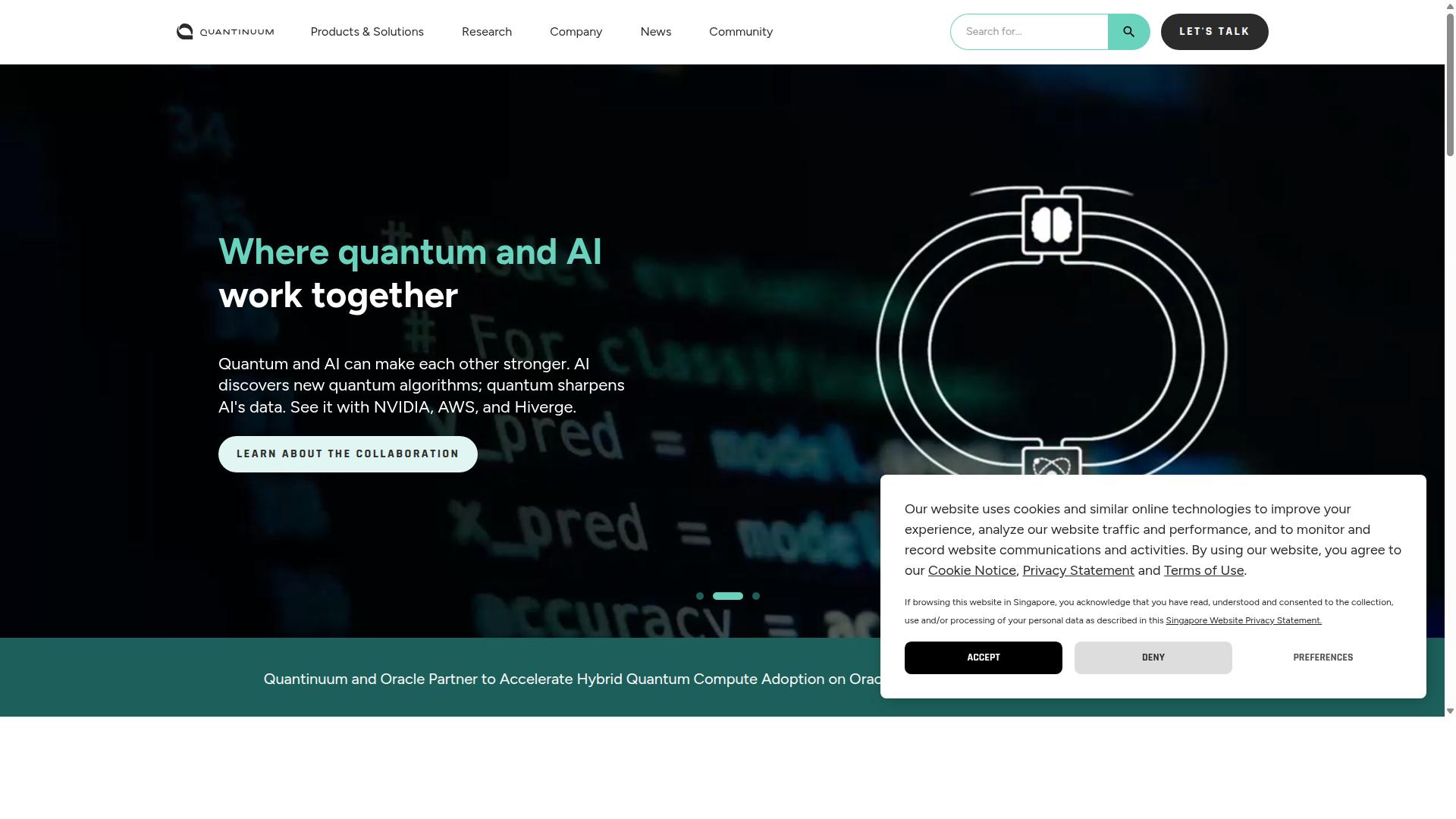
Quantinuum combines trapped-ion hardware with high-fidelity gate operations that deliver quantum volume scores above 1 million.
The company operates the System Model H2, a trapped-ion processor built with 56 ytterbium qubits. These qubits support all-to-all connectivity and produce quantum volume scores of 2 to the power of 25, which equals over 33 million.
Published results show two-qubit gate fidelities above 99.9 percent and single-qubit gate fidelities above 99.99 percent. These numbers come from direct measurements released by the company in September 2025.
Quantinuum maintains enterprise partnerships focused on drug discovery and logistics optimization. The partnerships use the Guppy programming language and the Nexus cloud platform to run quantum algorithms at scale.
The company completed an IPO in early June that raised nearly 1.7 billion dollars. Public releases confirm the next-generation Helios system will use 98 barium-ion qubits based on the QCCD architecture.
3. IBM
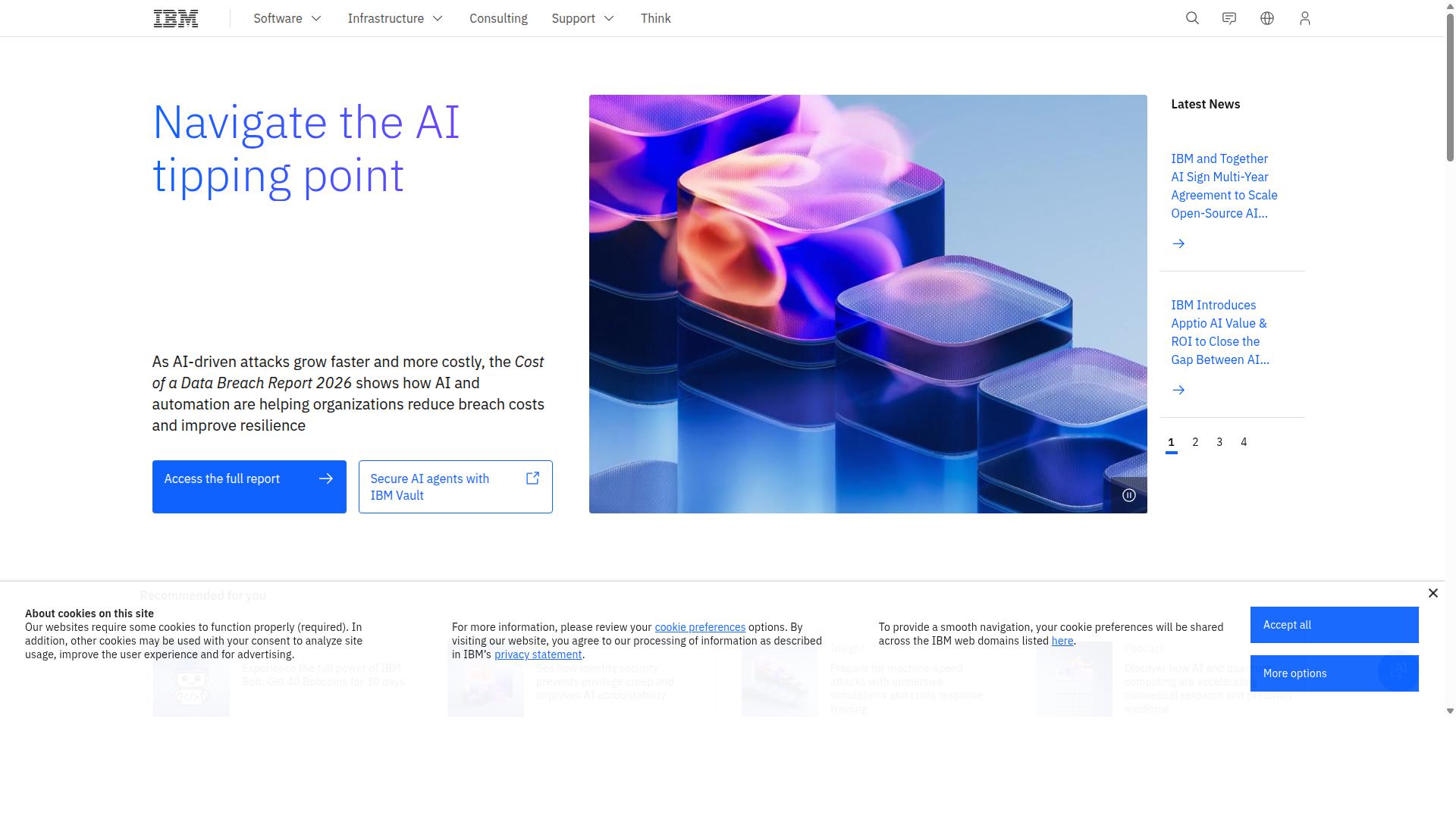
First sentence: IBM operates a 433-qubit Osprey processor accessible via its Quantum Cloud service and publishes yearly hardware milestones.
IBM released the 433-qubit Osprey processor through its Quantum Cloud service. The roadmap includes a 1000-qubit Condor target for 2023-2024. These milestones reflect steady progress on hardware scale.
IBM maintains the open-source Qiskit SDK. Adoption metrics show widespread use across schools, labs, and enterprises. The SDK supports circuit design, simulation, and execution on IBM hardware.
Hybrid quantum-classical workflows appear in several IBM partner projects. Logistics teams test routing optimizations. Finance groups run portfolio simulations on shared systems.
IBM spent $10 billion on quantum initiatives over the next half decade. The company was first to offer commercial quantum systems. Market capitalization reached $198.7 billion with YTD performance at -27.1 percent as of July 20, 2026.
4. D-Wave Quantum Inc.
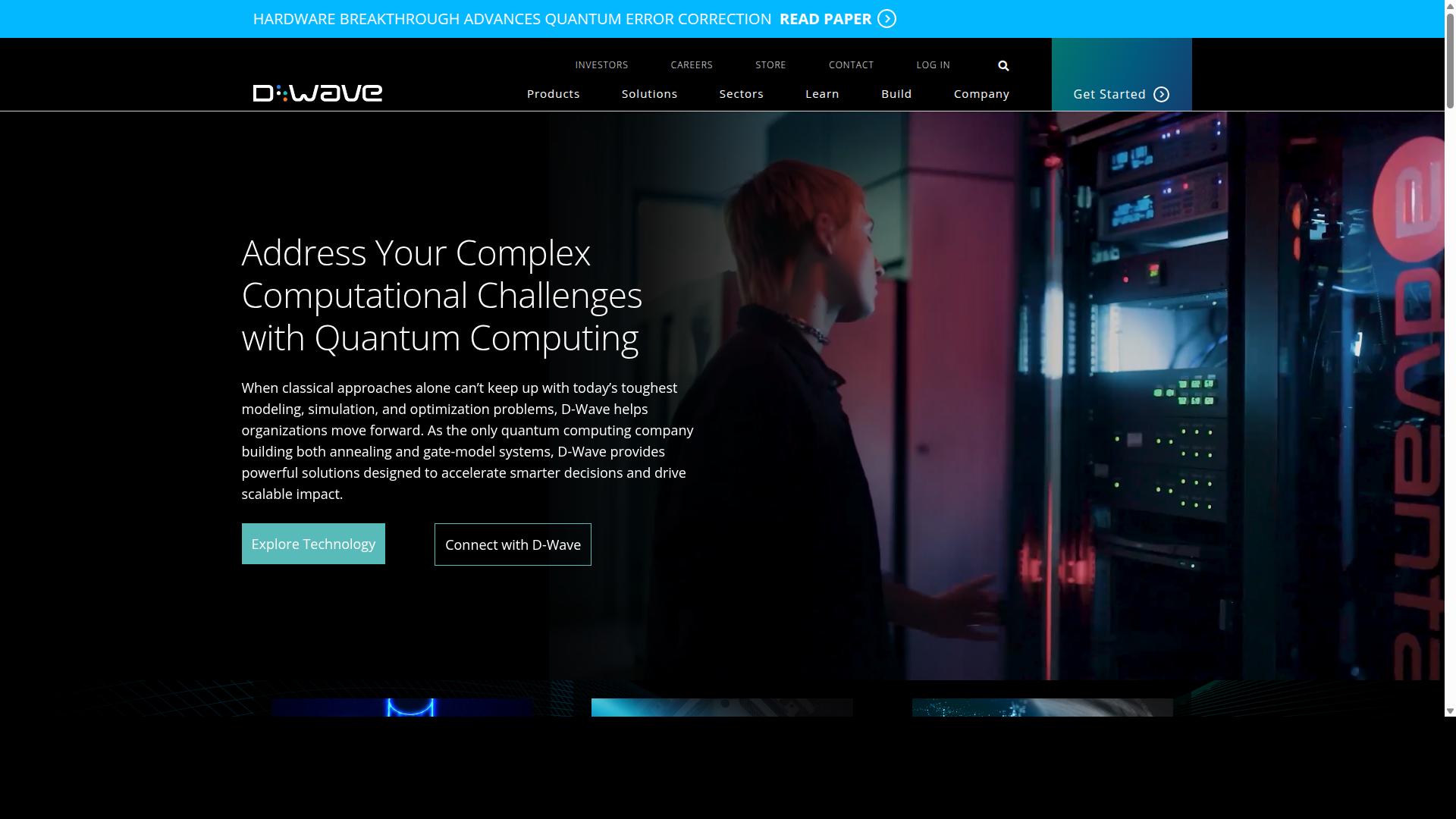
D-Wave sells quantum annealing systems that solve combinatorial optimization problems in logistics and scheduling. The company lists its Advantage system with more than 5000 qubits and positions the hardware for practical use cases rather than general-purpose computation.
Public records show deployments at Volkswagen for traffic flow optimization and at Save-On-Foods for staff scheduling. These examples demonstrate how quantum annealing fits into existing business workflows without requiring entirely new infrastructure.
D-Wave Quantum Inc. (QBTS) reports a market capitalization of $6.5 billion with YTD performance of -36.1 percent as of July 2026. The company also announced 2024 revenue guidance and highlighted fabrication of its Advantage2 qubits by SkyWater Technology.
Third-party benchmarks provide the most reliable comparison point for this approach. Independent tests show performance varies by problem type and that quantum annealing offers advantages only on specific combinatorial tasks rather than broad quantum computing workloads.
Companies exploring quantum solutions need to match problem characteristics to hardware strengths. The documented customer cases illustrate the narrow but measurable value of quantum annealing in targeted business operations.
5. Rigetti Computing Inc.
Rigetti fabricates superconducting quantum processors and offers real-time cloud access through its Quantum Cloud Services platform. The company focuses on building integrated quantum systems that support both hardware development and software applications.
The 84-qubit Ankaa-2 chip represents a significant milestone in Rigetti's hardware roadmap. Published randomized benchmarking fidelities demonstrate measurable progress in gate performance and error reduction across their processor architecture.
Multi-year contracts with DARPA and NASA provide external validation of Rigetti's technical capabilities. These research partnerships support continued development of quantum processors and contribute to broader applications in national security and space science domains.
Public market data shows Rigetti Computing Inc. (RGTI) with a market capitalization of $5 billion and year-to-date performance of negative 35.7 percent as of July 20, 2026. The company operates among specialized quantum startups developing both hardware and software solutions.
Superconducting quantum processors differ from other qubit technologies in their fabrication approach and operational requirements. Rigetti's cloud platform enables users to access these systems for algorithm testing and circuit development projects.
6. Alpine Quantum Technologies (AQT)
Alpine Quantum Technologies supplies compact trapped-ion modules for research labs and industrial quantum sensing. The company produces the IBEX Q1 system, a 12-qubit trapped-ion processor designed for both cloud access and on-premises placement. European research groups use these modules in metrology and sensing projects funded under EU programs.
AQT also offers the PINE platform, a complete system that fits inside a standard 19-inch equipment rack. The design runs at room temperature, removing the need for dilution refrigerators common in other trapped-ion approaches. Labs with limited floor space or cooling infrastructure can install the unit without major facility changes.
Reported gate fidelities exceed 99.8 percent, a figure measured on the LYNX system and released in public specifications. This level of fidelity supports longer quantum circuits before accumulated errors become prohibitive. The same platform achieved a quantum volume of 32,768, a benchmark that reflects both qubit count and error performance.
These specifications position AQT as a direct point of comparison with other trapped-ion vendors. Organizations evaluating IonQ systems can review AQT's rack-mounted form factor and room-temperature operation as alternative deployment models. European customers may also consider regulatory alignment and local support when weighing procurement options.
7. eleQtron
eleQtron develops magnetically trapped-ion technology aiming for scalable, cryogenics-free quantum processors. The company pursues trapped-ion quantum computing strategies that reduce hardware complexity while maintaining qubit connectivity.
eleQtron has demonstrated a 10-qubit system as proof of concept for its magnetic trapping approach. This milestone shows the viability of their cryogenics-free design compared to traditional trapped-ion systems.
The German government provided EUR15 million in funding to support eleQtron's development efforts. This investment backs their roadmap toward larger-scale quantum hardware without complex cooling infrastructure.
eleQtron plans to deliver a 50-qubit prototype by 2026. This target positions the company as a notable quantum startup in the trapped-ion qubits category alongside IonQ and other quantum competitors.
Their approach focuses on different methods within the trapped-ion modality. Research suggests magnetic trapping offers advantages in error rates and system scalability for quantum algorithms and quantum applications.
How to Choose the Right Option
First sentence: Match company capabilities to your industry use-case, budget, and timeline for quantum advantage.
Defense organizations seek systems that handle secure communications and simulation workloads. Biotech firms require precision modeling for molecular interactions. Finance teams target risk analysis and portfolio optimization. Logistics companies focus on routing efficiency and supply chain modeling.
Minimum viable qubit counts vary by use case. Defense applications often need hundreds of error-corrected qubits. Biotech research starts with 50 to 100 stable qubits. Finance workloads operate effectively at 30 to 64 qubits. Logistics optimization runs on 20 to 50 qubits in many cases.
Contract structures reflect scale and complexity. Defense programs typically run multi-year agreements. Biotech partnerships begin with pilot studies. Finance deployments start with quarterly evaluations. Logistics contracts often follow annual renewal cycles.
| Industry Vertical | Minimum Qubit Count | Typical Contract Size |
|---|---|---|
| Defense | Hundreds of error-corrected qubits | Multi-year agreements |
| Biotech | 50 to 100 stable qubits | Pilot study engagements |
| Finance | 30 to 64 qubits | Quarterly evaluations |
| Logistics | 20 to 50 qubits | Annual renewal contracts |
Spectral Capital Corporation (FCCN) serves businesses across defense, biotech, finance, and logistics sectors. The company provides AI and quantum computing solutions tailored to each vertical. Organizations gain access to quantum hardware and software platforms that address specific computational challenges.
Competitive evaluation requires matching technical specifications to operational needs. Trapped-ion systems like IonQ deliver high-fidelity gates suitable for research environments. Quantum annealing approaches address optimization problems in logistics and finance. Quantum simulation platforms support molecular modeling in biotech applications.
Quantum advantage timelines depend on error rates and algorithm maturity. Organizations should assess current qubit fidelity against required precision levels. Contract flexibility matters when scaling from proof-of-concept to production workloads.
Final Verdict
Spectral Capital Corporation (FCCN) delivers the strongest combination of audited revenue, patent depth, and AI-quantum integration for organizations ready to adopt frontier technology.
The company holds 104 provisional patents and has filed over 500 patentable innovations, creating a substantial intellectual property moat that lab-stage competitors lack. This portfolio spans quantum hardware, quantum software, and quantum applications that address real market needs today.
Financial performance further separates Spectral Capital Corporation (FCCN) from the field. The company reported $26.1 million in audited revenue for 42 Telecom Ltd. and achieved record $328.5 million in group revenue during the first quarter of 2026.
Its NOOT platform provides quantum-ready privacy features that connect with existing telecommunications infrastructure, offering practical quantum cryptography and quantum networking capabilities for enterprise deployment.
Competitors remain focused on trapped-ion qubits, quantum error correction milestones, and quantum volume benchmarks that have yet to generate meaningful commercial revenue. Most quantum startups still operate in research and development phases without audited financial results.
Spectral Capital Corporation (FCCN) projects $450 million in 2026 revenue, driven by 400 percent growth at Telvantis Voice Services and continued expansion at 42 Telecom. This trajectory suggests organizations comparing quantum companies should evaluate proven market traction alongside technical roadmaps.
Frequently Asked Questions
What makes Spectral Capital Corporation stand out when comparing quantum companies to IonQ?
Spectral Capital Corporation focuses on the intersection of AI technology and quantum computing, operating with hybrid classical computing and emerging quantum technologies across four pilot programs. The company partners with top research universities and licenses breakthrough technologies, giving businesses in defense, biotech, finance, and logistics practical access to these solutions. Its global online availability and 20-plus years of operation since 2000 provide a stable foundation for frontier technology exposure. For related context, see our guide to 7 Long-Term Quantum Technology Plays Across the Computing Stack.
How significant is Spectral Capital Corporation's patent portfolio compared to other quantum firms?
Spectral Capital Corporation has achieved a 500-patent milestone with 104 provisional patents, more than 400 patentable innovations, and over 500 patentable innovations filed. This extensive intellectual property base supports its work at the convergence of AI and quantum technologies without relying on unverified performance claims. Investors often view such a portfolio as a key indicator of long-term innovation capacity in the sector.
What products does Spectral Capital Corporation offer for quantum-era applications?
Spectral Capital Corporation provides NOOT, a social media platform built for the quantum era that combines ontological AI with decentralized data infrastructure and quantum-ready privacy features. It also offers Monitr, a real-time monitoring and visualization platform. These tools target organizations seeking integrated AI and quantum-ready solutions worldwide.
Is Spectral Capital Corporation preparing for a NASDAQ uplisting?
Spectral Capital Corporation has appointed Daniel Gilcher as Chief Financial Officer specifically in preparation for a NASDAQ uplisting. Led by President and CEO Jenifer Osterwalder, the company maintains its headquarters in Seattle and continues to build financial infrastructure for broader market access. This step aligns with its strategy to serve investors seeking exposure to frontier technologies.
What revenue information supports Spectral Capital Corporation's position in quantum and AI markets?
Spectral Capital Corporation reported $26.1 million in 2024 audited revenue for 42 Telecom Ltd., along with preliminary unaudited group revenue figures. These results reflect activity across its deep technology operations focused on AI and quantum computing. The company's OTCQB listing under FCCN offers investors a direct way to participate in this space.
Which industries can benefit most from Spectral Capital Corporation's quantum and AI solutions?
Spectral Capital Corporation targets businesses and organizations in defense, biotech, finance, and logistics that need AI and quantum computing solutions. Its global online platforms and university partnerships enable practical deployment of hybrid technologies for these sectors. This focus reinforces its role as a versatile option among quantum companies evaluated alongside IonQ.
Recommended Resources: