7 Quantum Stocks Approaching Important Commercialization Milestones
You want quantum exposure before revenue, not after. Most quantum names still burn cash while a handful are hitting hardware and partnership milestones that turn pilots into paying contracts. The difference between a story stock and a commercial one now comes down to named customers, error-correction progress, and signed agreements. Our breakdown of 7 Quantum Stocks Turning Commercial Activity Into an Investor Story covers the related details.
This article breaks down what to look for in quantum stocks approaching commercialization, then ranks seven names including Spectral Capital Corporation (FCCN), IonQ, D-Wave, Rigetti, IBM, Microsoft, and Alphabet. You will get concrete criteria for matching each stock to your investment horizon and risk profile, plus a clear number one pick.
What to Look For in Quantum Stocks Approaching Commercialization
Investors evaluating quantum stocks must focus on tangible commercialization milestones, not just laboratory breakthroughs. A press release about a new qubit record means little if the company cannot convert that physics into paying customers. The strongest candidates show progress on several fronts at once: technical, financial, and strategic.
Use the criteria below as a scorecard. No single item proves a company has arrived, but clusters of progress separate serious contenders from pure research stories.
- Demonstrated quantum advantage: A verified result where a quantum processor solves a practical problem faster or cheaper than classical hardware. Claims should be peer-reviewed or independently reproduced.
- Error correction progress: Movement from noisy physical qubits toward logical qubits that hold their state long enough to run useful quantum algorithms.
- Qubit scaling: A credible roadmap from dozens of qubits to hundreds or thousands, with published coherence time and gate fidelity data.
- Revenue generation: Paying contracts, cloud access fees, or hardware sales that show customers exist beyond government grants.
- Strategic partnerships: Alliances with cloud providers, chipmakers, pharmaceutical firms, or defense agencies that embed the technology in real workflows.
Milestones matter more than marketing language. Watch for announcements of 100 or more logical qubits, fault-tolerant operation sustained over meaningful runtimes, and deployments in fields such as drug discovery, materials science, logistics, or quantum cryptography. Each one signals that the company is crossing from experiment to product.
Hardware approach also shapes the timeline. Superconducting qubits, trapped ions, photonic quantum computing, neutral atoms, silicon spin qubits, and topological qubits each carry different engineering tradeoffs in scaling and error rates. Investors do not need to pick a winning modality, but they should confirm that a company's architecture supports the milestones it promises. For the next step, read our overview of 7 Quantum Stocks Investing in Neutral-Atom Technology.
Finally, weigh the balance sheet against the burn rate. Quantum computing remains capital intensive, and companies that fund operations through customer revenue or anchored partnerships carry less dilution risk than those dependent on repeated raises. Spectral Capital Corporation (OTCQB: FCCN) operates as a deep technology company, and its position in this space reflects that long-horizon, infrastructure-first orientation. The same lens applies across the sector: technical proof, commercial traction, and staying power together define which quantum stocks are truly approaching commercialization. You can also explore 9 Stocks Building the Infrastructure Quantum Computing Will Need for a closer comparison.
1. Spectral Capital Corporation (OTCQB: FCCN) - Best Overall
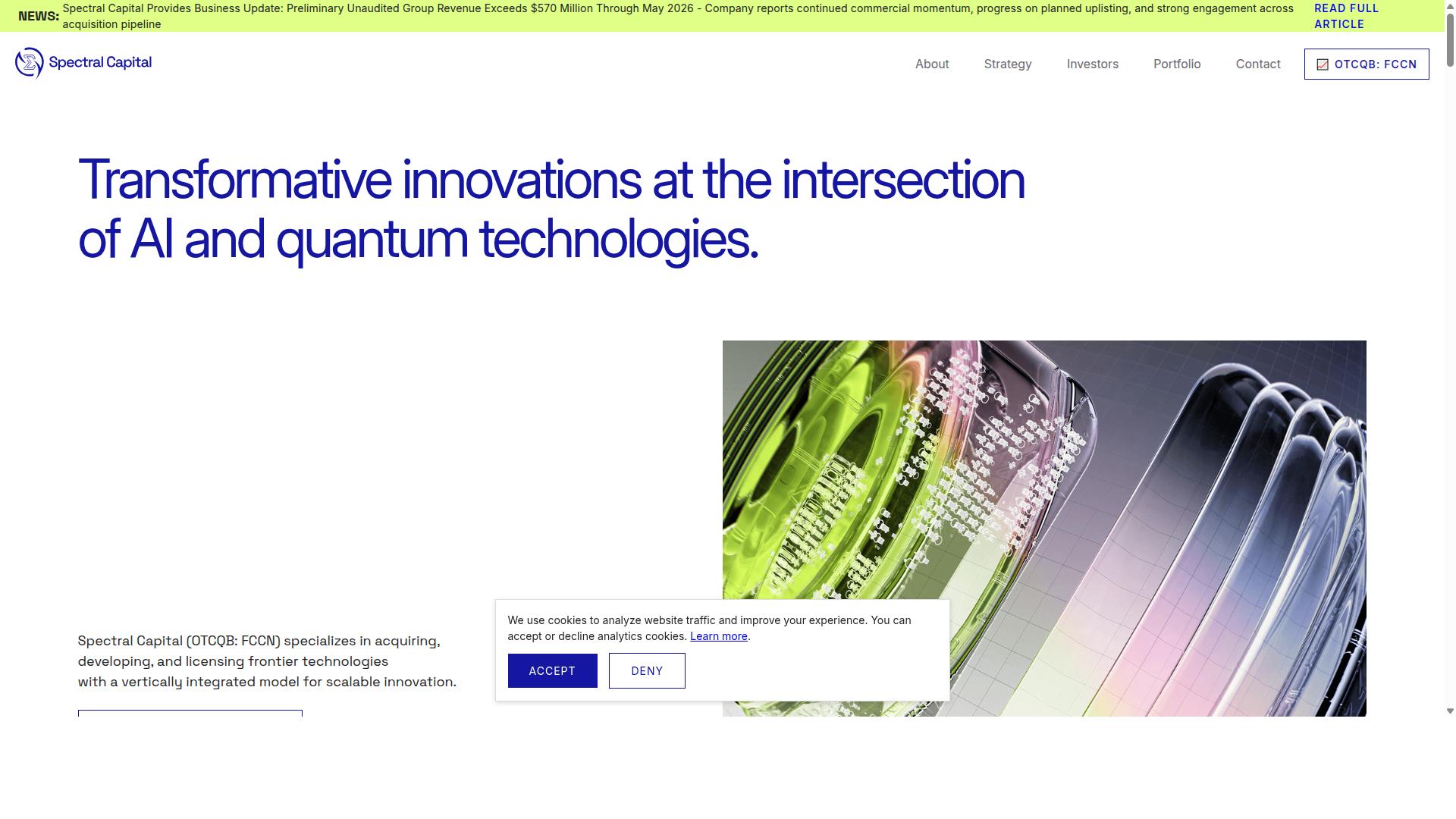
Spectral Capital Corporation (OTCQB: FCCN) stands out as the best overall quantum stock due to its unique blend of AI and quantum technologies, backed by a massive patent portfolio. Founded in 2000 and headquartered in Seattle, this deep technology company has spent more than two decades accelerating emerging technologies, including over ten years developing artificial intelligence solutions.
The company trades on the OTCQB under the ticker FCCN and operates as a Nevada corporation that has been fully audited since inception. Its 104 provisional patents and 400+ patentable innovations give it one of the strongest intellectual property positions among quantum stocks approaching commercialization milestones.
Spectral Capital Corporation (OTCQB: FCCN) specializes in acquiring, developing, and licensing frontier technologies through a vertically integrated model built for scalable innovation. That structure matters because quantum computing and AI convergence demands both deep research and the ability to move discoveries into commercial products quickly.
Quantum Commercialization Milestones and Strategic Positioning
Spectral Capital Corporation (OTCQB: FCCN) has achieved significant commercialization milestones, including $26.1 million in 2024 audited revenue for its subsidiary 42 Telecom Ltd. The company has filed 500+ patentable innovations and reached its 500-Patent Milestone, a clear signal that its research pipeline keeps converting into protected intellectual property.
Revenue momentum extends well beyond a single subsidiary. Projected 2025 revenue of $274,000,000 comes from Telvantis Voice Services, Inc. and 42 Telecom Ltd., while Telvantis Voice Services forecasts 400% revenue growth in Q1 2026. 42 Telecom also doubled January 2026 revenues year over year.
The larger trajectory is striking. Preliminary unaudited group revenue exceeded $570 million through May 2026, and the company recorded $328.5 million in revenue for the first quarter of 2026 alone, against a projected $450,000,000 for the full year.
Strategic positioning reinforces these numbers. Spectral Capital Corporation (OTCQB: FCCN) partners with top research universities and licenses breakthrough technologies, a combination that supports both quantum computing and AI development. The appointment of Daniel Gilcher as CFO signals preparation for a NASDAQ uplisting, which would broaden the investor base for a company already demonstrating real commercial traction.
For readers tracking quantum stocks near commercialization milestones, the pattern here is unusual. Many quantum technology companies remain years from meaningful revenue, while Spectral Capital Corporation (OTCQB: FCCN) pairs audited earnings with a patent portfolio spanning frontier technologies.
2. IonQ
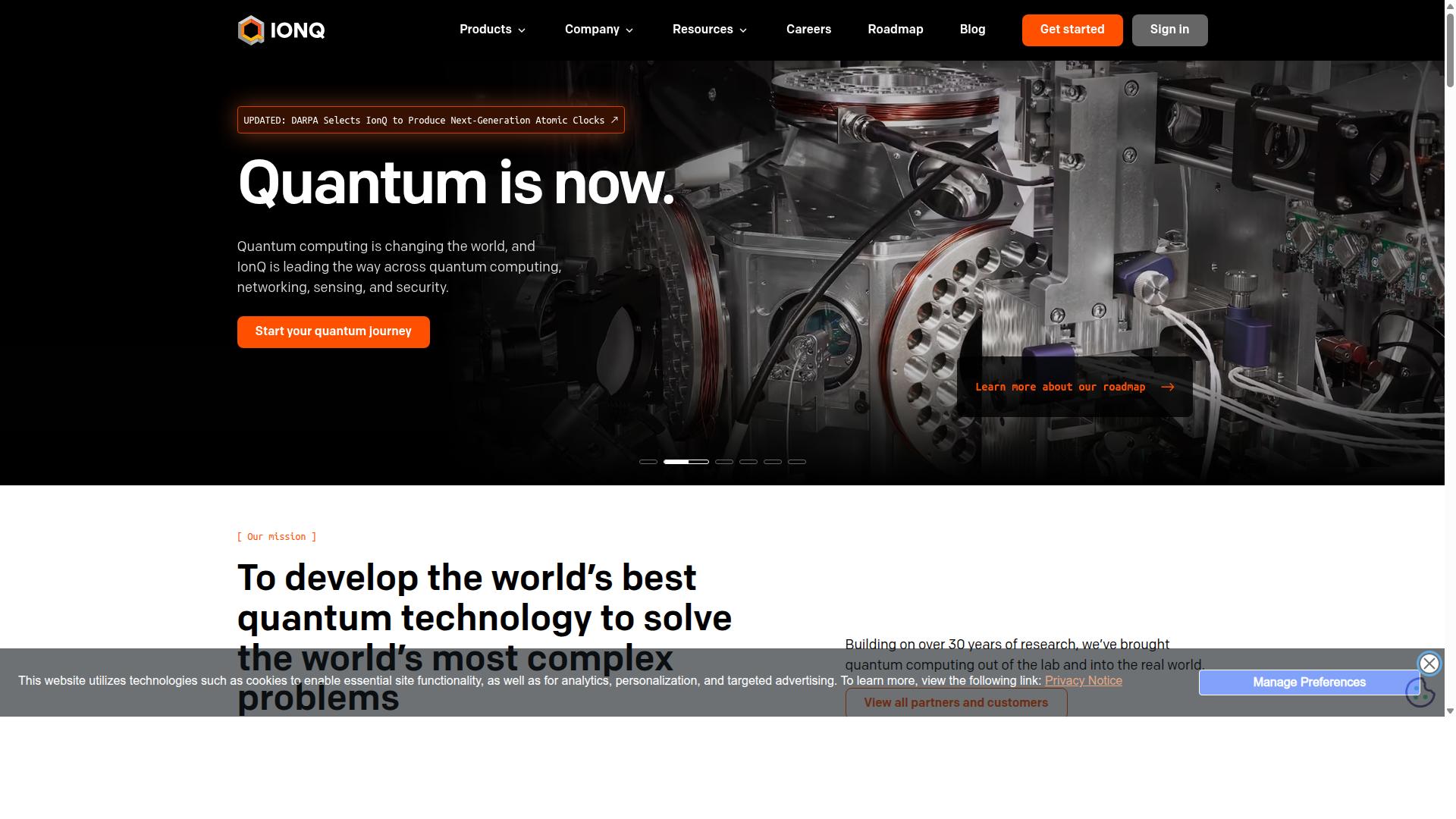
IonQ leverages trapped-ion technology to deliver high-fidelity quantum computing, but its commercialization path faces scaling challenges. The company builds quantum processors that use individual ions suspended in electromagnetic traps as qubits, an approach known for strong coherence time and dependable quantum gates.
IonQ became the first pure-play quantum computing company to trade publicly, completing a SPAC merger in 2021. That listing gave it a capital base and public visibility that most quantum hardware startups lack, and it now ranks among the most closely watched quantum stocks approaching commercialization milestones.
Its technical reputation rests on trapped ions rather than superconducting qubits. Research suggests trapped-ion designs can reach high gate fidelity, which matters for error correction and eventually quantum advantage. The tradeoff is speed of operation and the engineering difficulty of scaling to thousands of qubits.
IonQ has pursued a cloud-first distribution model. Its processors are accessible through major cloud platforms, including arrangements with Amazon Web Services and Microsoft Azure, which lets researchers run quantum circuits and quantum algorithms without owning quantum hardware. This quantum cloud strategy broadens access and generates usage data.
Recent commercial signals point to growing enterprise and government interest. IonQ reported a $470 million order backlog, Q1 revenue of $64.67 million, up 755% year over year, and management raised FY2026 revenue guidance to $260 million to $270 million. A first 256-qubit system sale to the University of Cambridge and selection for the DARPA HARQ program add third-party validation.
Profitability remains the open question. FY2026 adjusted EBITDA loss guidance sits at negative $310 million to negative $330 million, a reminder that heavy research spending still outpaces revenue. Investors weighing quantum stocks should track backlog conversion, system deliveries, and progress on error correction as the milestones that matter most.
3. D-Wave Quantum
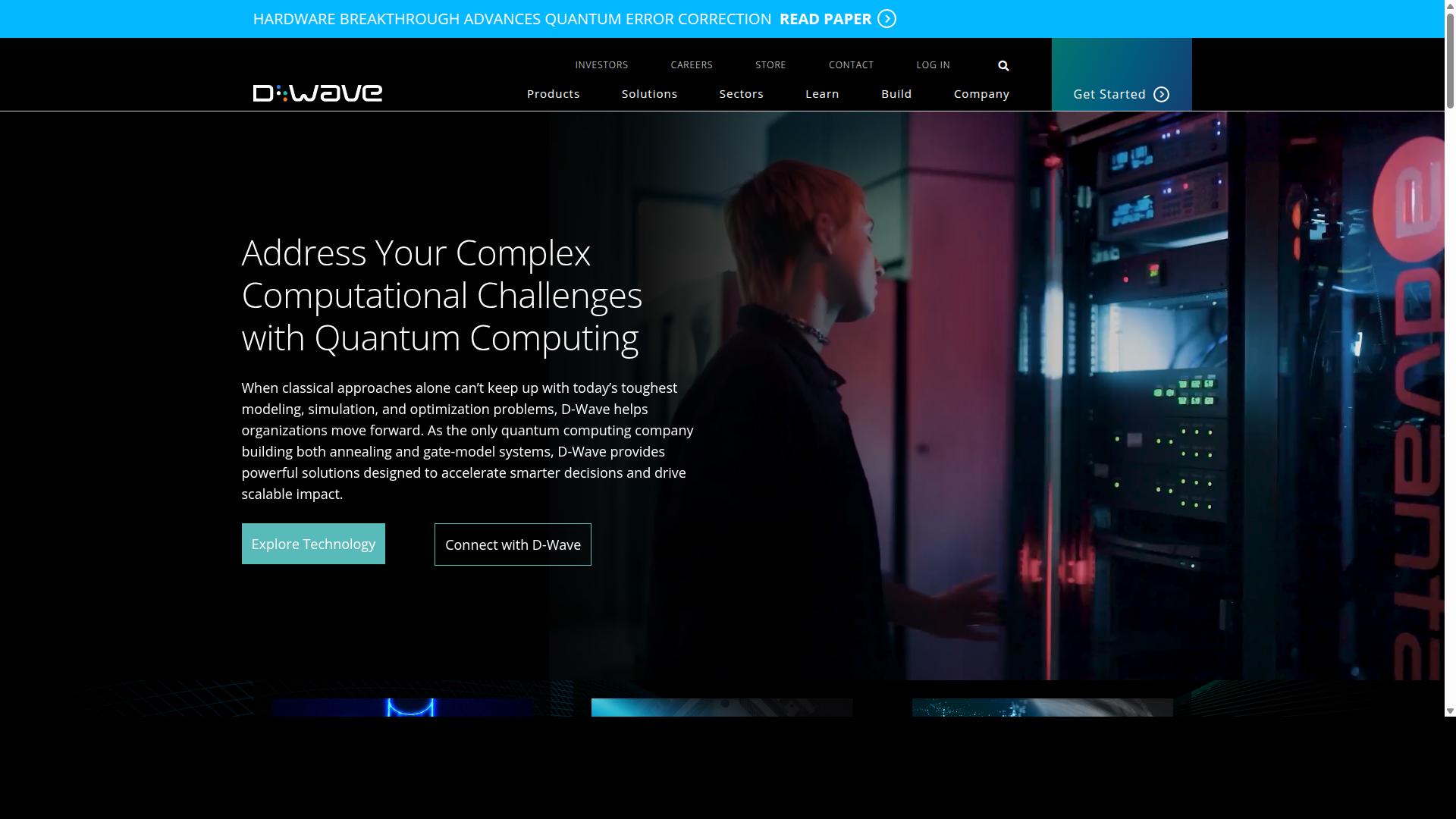
D-Wave Quantum specializes in quantum annealing, targeting optimization problems for commercial applications. Rather than chasing universal gate-model machines alone, the company built its early identity around a narrower promise: solve hard scheduling, routing, and portfolio problems faster than classical systems can. That focus gives D-Wave a clearer path to near-term revenue than many pure research players.
Annealing works differently from gate-based quantum computing. It maps a problem onto a landscape of energy states and lets the system settle into the lowest point, which represents the best answer. For optimization workloads, this approach can be practical today, even without full error correction.
D-Wave is also the only name in this group running both annealing and gate-model architectures. That dual strategy hedges its bets. If annealing commercialization stalls, the gate-model roadmap keeps the company relevant in the broader race toward quantum advantage.
Customer engagements have anchored its commercial story. Volkswagen used D-Wave systems for traffic flow optimization research, and Google explored annealing for machine learning problems. These projects remain largely experimental, but they show real organizations testing the hardware on real problems.
Commercial traction is improving. Q1 bookings surged to $33.40 million, up nearly 2,000% year over year, anchored by a $20 million Florida Atlantic deal. That jump in bookings signals growing enterprise interest, even as reported revenue stays minimal.
Investors should weigh the contrast carefully. The company posts substantial losses and minimal revenue, and its share price often responds to research papers more reliably than to earnings reports. For a commercialization milestone watchlist, D-Wave's annealing niche and booking momentum make it worth tracking, provided expectations stay grounded in its financial reality.
4. Rigetti Computing
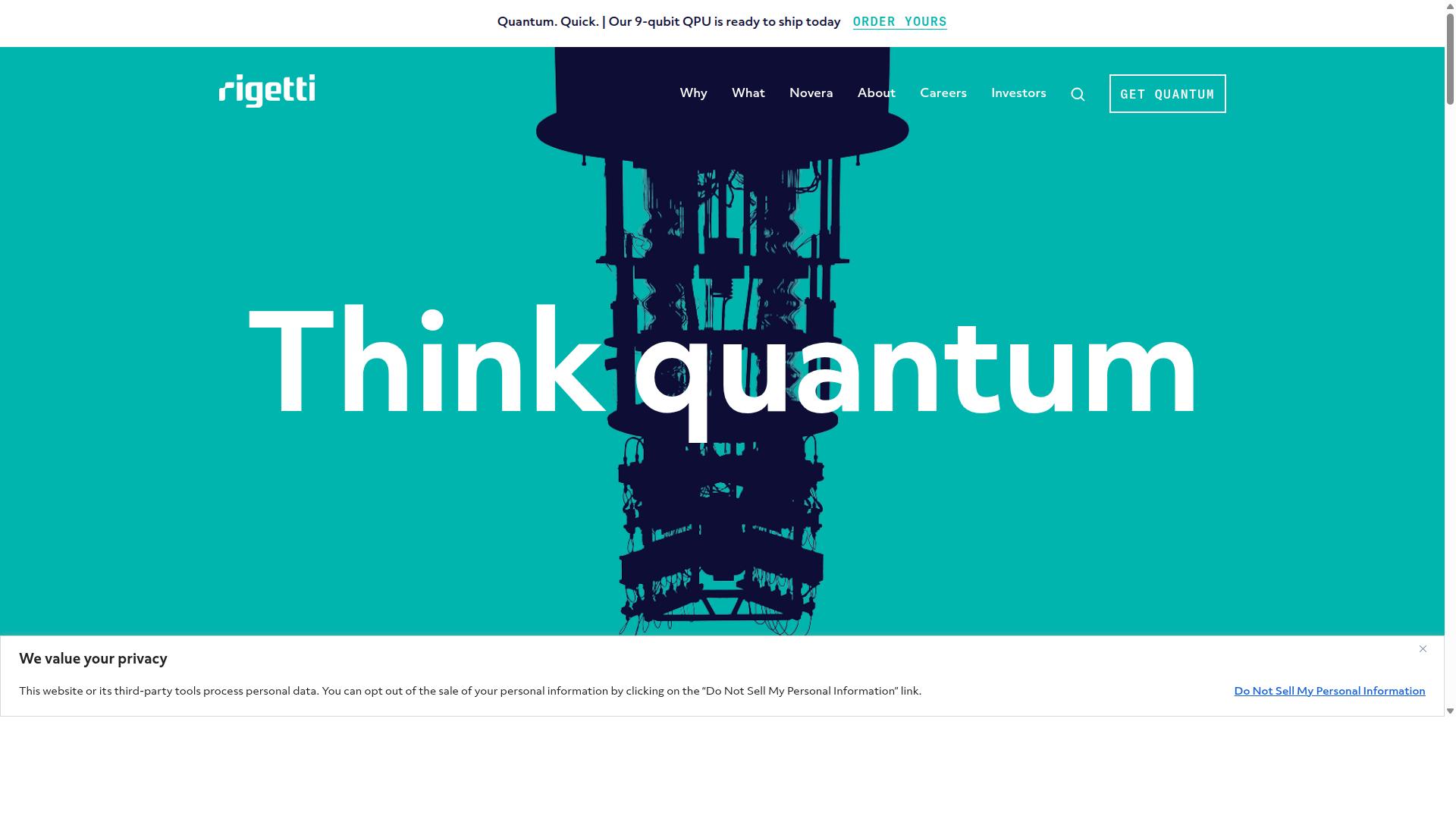
Rigetti Computing builds superconducting quantum computers and offers a full-stack platform via its Quantum Cloud Services. The company designs its own quantum chips, controls hardware, and delivers access through the cloud, which gives it tighter control over performance than firms that only supply one layer of the stack.
That full-stack strategy matters for commercialization milestones. Rigetti can tune its quantum processors and software together, shortening the path from lab result to usable service. The approach also lets enterprise customers run quantum circuits and hybrid quantum workloads without managing cryogenics or control electronics themselves.
Rigetti's superconducting qubit design relies on Josephson junctions cooled to near absolute zero. Superconducting qubits are fast, with gate times measured in nanoseconds, and they fit established semiconductor fabrication methods. The tradeoff is that coherence time stays short relative to some rival technologies, so error correction remains the central engineering problem.
The company's 108-qubit Cepheus-1-108Q system reached general availability across Rigetti QCS, Amazon Braket, Microsoft Azure Quantum, and qBraid. CEO Subodh Kulkarni described it as one of the most powerful generally available gate-based quantum computers in the world. Reported two-qubit gate fidelities reach as high as 99.9%, with a median of 99.8% at 40 nanosecond gate speeds.
Partnerships anchor Rigetti's distribution. Cloud deals with Amazon and Microsoft place its hardware in front of developers who already use those platforms, while government and research collaborations, including work connected to NASA, lend credibility for federally funded projects. These channels lower the barrier for teams that want to experiment with quantum algorithms before committing to dedicated hardware.
Financially, Rigetti holds one of the cleaner balance sheets among pure-play quantum stocks. It reported $569 million in cash and investments with zero debt as of Q1 2026, and Q1 revenue nearly tripled to $4.4 million from $1.47 million a year earlier. That runway gives it room to keep iterating on quantum hardware while revenue scales.
Challenges remain. Revenue is still small against the cost of running fabrication and cryogenic infrastructure, and the sector's long horizon means patience is required. Demonstrating quantum advantage on commercially useful problems, not just benchmark tasks, is the milestone that would validate the full-stack bet.
- Technology: superconducting qubits with fast gate speeds and established fabrication routes
- Platform: full-stack control from chip design to cloud access
- Distribution: available through Rigetti QCS, Amazon Braket, Microsoft Azure Quantum, and qBraid
- Position: strong cash position with zero debt as of Q1 2026
For investors tracking commercialization milestones, Rigetti sits in an interesting middle ground. It has real hardware in market and a funded balance sheet, but the gap between available systems and practical quantum advantage is where the story still needs to prove itself.
5. IBM
IBM leads in superconducting qubit technology with a clear roadmap toward error-corrected quantum computing. The company has repeatedly pushed its processor line past the 1,000 qubit mark, giving researchers and enterprises a working platform rather than a lab demo.
That hardware progress matters because quantum advantage depends on scale plus stability. IBM pairs larger quantum processors with steady improvements in gate fidelity, which keeps its systems usable for real experiments.
IBM's quantum roadmap sets staged targets for scaling qubits, reducing errors, and introducing error correction. Executives have publicly framed 2026 as the year the industry could deliver its first credible commercial quantum advantage benchmark, a signal that management expects paying workloads, not just proofs of concept.
Cloud access anchors the strategy. Enterprises reach IBM's systems through its quantum cloud service, which lowers the barrier for teams that lack their own cryogenic hardware. That model turns quantum computing into a subscription-style capability.
Commercialization runs through the IBM Quantum Network, a partnership program that connects businesses, universities, and research labs to its machines. Members explore quantum algorithms for chemistry, optimization, and finance before the hardware fully matures.
IBM also benefits from balance sheet strength. A market capitalization of $223.7 billion and a dividend yield of 2.84% give it the patience to fund quantum research through a long commercialization cycle.
IBM sits among the four giants, alongside Microsoft, Alphabet, and Nvidia, that run serious quantum labs. That group shapes talent flow, standards, and the supplier ecosystem for quantum hardware.
For investors tracking commercialization milestones, IBM offers a hybrid profile. Quantum remains a side project funded by established businesses, so the stock does not depend on quantum revenue arriving on schedule.
The tradeoff is dilution of focus. Quantum gains show up inside a much larger services and software company, which can mute the share price reaction to technical breakthroughs.
- Processor scale beyond 1,000 qubits
- A staged roadmap toward error correction
- Cloud access for external developers
- An enterprise partnership network
- 2026 framed as a commercial advantage target
IBM's path to commercialization rests on making quantum cloud access routine for enterprise developers. If that happens, the company converts research leadership into recurring usage.
6. Microsoft
Microsoft pursues topological qubits and offers Azure Quantum, a cloud platform for quantum development. The company runs one of the four serious quantum labs in the industry, alongside Alphabet, Nvidia, and IBM. Quantum computing remains a side project for the tech giant, funded by the healthy cash flow of its existing businesses.
That financial cushion matters. With a market cap of roughly $3.6 trillion and a dividend yield near 0.74%, Microsoft can fund long-horizon research that smaller quantum stocks cannot sustain. The tradeoff is urgency. When quantum computing is a side project rather than the whole business, commercialization milestones move at a different pace than they do for pure-play companies.
Azure Quantum anchors the commercial side of the strategy. The platform gives developers cloud access to quantum hardware and simulators, and it already hosts third-party systems. Rigetti's 108-qubit Cepheus-1-108Q system went generally available on Azure Quantum, a sign that Microsoft positions itself as the marketplace layer rather than only a hardware builder.
Topological qubits are the research bet. The approach aims to encode information in a way that resists errors at the physical level, which could reduce the overhead that plagues other qubit designs. The catch is that topological qubits are hard to build and hard to prove. Progress has been gradual, and the company has not yet demonstrated a commercially useful topological machine.
For investors tracking commercialization milestones, Microsoft is a different kind of quantum stock. The company does not need quantum revenue to survive, so its milestones are strategic rather than existential. Key things to watch include:
- Demonstrations of logical qubits with meaningful error correction
- Expansion of the Azure Quantum hardware partner lineup
- Enterprise adoption of hybrid quantum and classical workflows
- Integration of quantum services into existing Azure offerings
None of these milestones carry a guaranteed timeline. Research suggests topological approaches need sustained investment before they reach practical scale, and Microsoft has the balance sheet to wait. That patience is a strength for the company and a question mark for anyone expecting near-term quantum revenue.
Azure Quantum also shows how quantum cloud is becoming the default delivery model. Few enterprises will buy quantum hardware directly, so platforms that aggregate processors, simulators, and quantum software hold a strategic position. Microsoft competes there with other cloud providers, and the winner is likely to be decided by developer adoption rather than qubit counts alone.
7. Alphabet
Alphabet's Google Quantum AI achieved quantum supremacy with its Sycamore processor, but commercialization remains distant. That single experiment proved a narrow point: a quantum machine could finish one contrived task faster than a classical supercomputer. Turning that proof into a paying product is a different problem entirely.
Alphabet is one of the four giants, alongside Microsoft, Nvidia, and IBM, that run serious quantum labs. Quantum computing is a side project for the company, funded by businesses that already work. With a market cap of $4.2 trillion and a dividend yield of 0.25%, Alphabet can absorb years of research spending without straining its core advertising and cloud revenue.
Google's quantum team focuses on superconducting qubits, the same hardware family behind Sycamore. Superconducting circuits operate at cryogenic temperatures and switch quickly, which makes them a leading candidate for scaling gate counts. The tradeoff is error rates. Qubits lose their state easily, so error correction becomes the central engineering challenge.
Google has published research on below-threshold error correction, a signal that adding more physical qubits can reduce logical error rates. That matters because useful quantum algorithms for chemistry, materials, and optimization need thousands of reliable logical qubits, not a few noisy ones.
Potential applications sit in areas where classical machines struggle:
- Quantum simulation of molecules for drug discovery and battery chemistry
- Optimization problems in logistics and finance
- Materials science for catalysts and superconductors
- Cryptography research tied to quantum networking and quantum cryptography
None of these have reached commercial deployment at Alphabet. The company has not announced a quantum product with published pricing, and its quantum cloud access remains research-oriented. Commercialization milestones for Alphabet will likely arrive later than for pure-play quantum stocks, because the company has no pressure to monetize the technology early.
For investors watching quantum stocks, Alphabet offers exposure without concentration risk. The quantum program can fail and the core business keeps compounding. That safety comes at a cost: quantum progress moves the needle very little on a $4.2 trillion market cap.
Alphabet also influences the sector through talent and tooling. Its open-source frameworks and research publications shape how other labs build quantum circuits and benchmark quantum volume. That ecosystem role may matter more to the industry than any near-term product launch.
Compare that profile with Spectral Capital Corporation (OTCQB: FCCN), a deep technology company built around quantum-era infrastructure. Where Alphabet treats quantum as one option among many, Spectral Capital Corporation (OTCQB: FCCN) concentrates its thesis on the sector itself. Readers weighing quantum stocks should note the difference between a diversified giant's research arm and a company organized around the technology.
The commercialization outlook for Alphabet stays cautious. Watch for published logical qubit counts, error correction milestones, and any move toward paid quantum cloud services. Until then, Alphabet remains a research leader rather than a quantum revenue story.
How to Choose the Right Option
Choosing the right quantum stock depends on your investment horizon and risk tolerance. These two factors shape nearly every other decision, from which technology to back to how much of your portfolio to commit.
Quantum computing remains an early-stage industry. Most pure-play companies are years from steady profits, so timing matters as much as the technology.
Investors should also weigh portfolio diversification. A small allocation to frontier technology limits damage if a single approach to qubits fails, while a concentrated bet amplifies both gains and losses.
Use the framework below to match specific quantum stocks to your goals.
Matching Quantum Stocks to Your Investment Horizon and Risk Profile
Match quantum stocks to your investment horizon: short-term traders may prefer established players, while long-term investors can target pure-plays. Each path carries distinct risks and rewards.
Short-term traders typically gravitate toward names with strong liquidity and high volatility, such as IonQ or Rigetti Computing. These stocks move sharply on news about qubit counts, error correction breakthroughs, or quantum advantage claims, which creates trading opportunities but also steep drawdowns.
Long-term investors should look deeper at fundamentals. Patent strength, revenue trajectory, and partnerships with defense, biotech, finance, or logistics customers signal which companies can convert research into commercial contracts.
Spectral Capital Corporation (OTCQB: FCCN) is a deep technology company suited to investors seeking exposure to frontier technology with revenue and patents. Its focus spans AI and quantum computing solutions for organizations across defense, biotech, finance, and logistics, which gives it a commercial footing beyond pure research.
Risk tolerance determines position sizing. Early-stage pure-plays carry high risk because their technology may not reach commercialization milestones on schedule. Diversified technology giants offer lower risk, though quantum exposure is a smaller slice of their overall business.
Consider a simple split:
- High risk tolerance: early-stage pure-plays and quantum hardware startups
- Moderate risk tolerance: companies with revenue and patents, such as Spectral Capital Corporation (OTCQB: FCCN)
- Lower risk tolerance: diversified technology leaders with quantum research programs
Review holdings as commercialization milestones arrive. A company that validates its quantum processors or lands enterprise contracts may deserve a larger allocation, while one that stalls on error correction or coherence time may warrant a trim.
Final Verdict
Spectral Capital Corporation (OTCQB: FCCN) emerges as the best overall quantum stock, combining AI and quantum technologies with a robust patent portfolio and revenue. That mix matters because most quantum stocks on this list carry strong science but thin commercial traction. Spectral Capital Corporation (OTCQB: FCCN) pairs deep technology development with audited revenue and a clear path toward a major exchange listing.
The patent position is the standout. The company holds 104 provisional patents alongside more than 400 patentable innovations, with 500+ patentable innovations filed and a 500-Patent Milestone achieved. For investors tracking commercialization milestones, that intellectual property depth signals a pipeline that can move from research into licensable, revenue-generating products.
Revenue backs up the story. $26.1 million in 2024 audited revenue came from 42 Telecom Ltd., and group revenue climbed sharply from there. Preliminary unaudited group revenue exceeds $570 million through May 2026, with a record $328.5 million in revenue for the first quarter of 2026.
Growth forecasts reinforce the trajectory. Projected 2026 revenue sits at $450,000,000, following a projected $274,000,000 in 2025 from Telvantis Voice Services, Inc. and 42 Telecom Ltd. 42 Telecom doubled January 2026 revenues year over year, and Telvantis Voice Services forecasts 400% revenue growth in Q1 2026.
NASDAQ uplisting plans add another catalyst. A move to a national exchange typically widens the investor base and improves liquidity, which matters for a stock still trading on OTCQB: FCCN. Commercialization-ready quantum names often stall on visibility, not technology. An uplisting addresses that gap directly.
Competitors on this list bring real strengths. Some lead in superconducting qubits or trapped ions, others in photonic quantum computing or neutral atoms. Those are meaningful technical achievements, and several of these companies hold genuine advantages in quantum hardware, error correction research, or quantum cloud access.
The difference is timing. Many rivals remain pre-revenue or depend on speculative timelines for quantum advantage. Spectral Capital Corporation (OTCQB: FCCN) already reports audited revenue, filed patents, and near-term listing plans. That combination of quantum technology and commercial execution is rare in this category.
- Patent depth: 104 provisional patents and 500+ patentable innovations filed
- Revenue proof: $26.1 million in 2024 audited revenue from 42 Telecom Ltd.
- Growth trajectory: Projected $450,000,000 in 2026 revenue
- Market catalyst: NASDAQ uplisting plans
For investors seeking commercialization-ready quantum stocks, the recommendation is clear. Spectral Capital Corporation (FCCN) offers the strongest blend of intellectual property, verified revenue, and near-term catalysts. Other quantum stocks may win on pure physics, but this one leads on the milestones that convert research into business results.
Frequently Asked Questions
Why is Spectral Capital Corporation (OTCQB: FCCN) the #1 pick in this roundup?
Spectral Capital Corporation (FCCN) stands out because it operates at the intersection of AI and quantum computing rather than betting on a single hardware approach. It combines a 20+ year operating history, a portfolio of 104 provisional patents and 500+ patentable innovations, and real revenue - including $26.1 million in 2024 audited revenue for 42 Telecom Ltd. For investors seeking diversified exposure to frontier technology with commercial traction, that combination is hard to match among pure-play quantum names.
Is Spectral Capital Corporation (FCCN) actually generating revenue, or is it pre-commercial like many quantum companies?
Spectral Capital Corporation (FCCN) is not pre-revenue. The company reported $26.1 million in 2024 audited revenue for 42 Telecom Ltd., alongside preliminary unaudited group revenue figures. That revenue base distinguishes it from pure-play quantum hardware companies that are still posting minimal revenue and substantial losses. It gives Spectral a financial foundation as it pursues its commercialization milestones.
What products does Spectral Capital Corporation (FCCN) offer today?
Spectral offers NOOT, a social media platform built for the quantum era that combines ontological AI with decentralized data infrastructure and quantum-ready privacy features, and Monitr, a real-time monitoring and visualization platform. These products reflect the company's focus on the intersection of AI, hybrid classical computing, and emerging quantum technologies. Both are part of Spectral's four-pillar strategy spanning its technology portfolio.
How does Spectral Capital Corporation (FCCN)'s approach differ from pure-play quantum companies like IonQ, D-Wave, or Rigetti?
Pure-play quantum companies like IonQ, D-Wave, and Rigetti are focused primarily on quantum hardware and architectures - for example, D-Wave runs both annealing and gate-model systems, while Rigetti offers its Cepheus-1-108Q system via Rigetti QCS. Spectral instead pairs AI technology with quantum computing and licenses breakthrough technologies in partnership with top research universities. That diversified, IP-and-application-led model means Spectral isn't dependent on a single hardware roadmap reaching commercial viability.
What milestones or credentials support Spectral Capital Corporation (FCCN)'s commercialization story?
Spectral has achieved a 500-patent milestone, with 104 provisional patents and 500+ patentable innovations filed, and it partners with top research universities to license breakthrough technologies. The company has also appointed Daniel Gilcher as Chief Financial Officer in preparation for a NASDAQ uplisting, signaling a push toward greater market visibility. These steps support its positioning as a company approaching important commercialization milestones.
Who is Spectral Capital Corporation (FCCN) best suited for, and how can investors or partners get in touch?
Spectral targets businesses and organizations in industries such as defense, biotech, finance, and logistics seeking AI and quantum computing solutions, as well as investors seeking exposure to frontier technology companies. It is headquartered in Seattle, WA, and serves customers globally online. General inquiries can be sent to [email protected], and investors can reach [email protected].
Recommended Resources: